
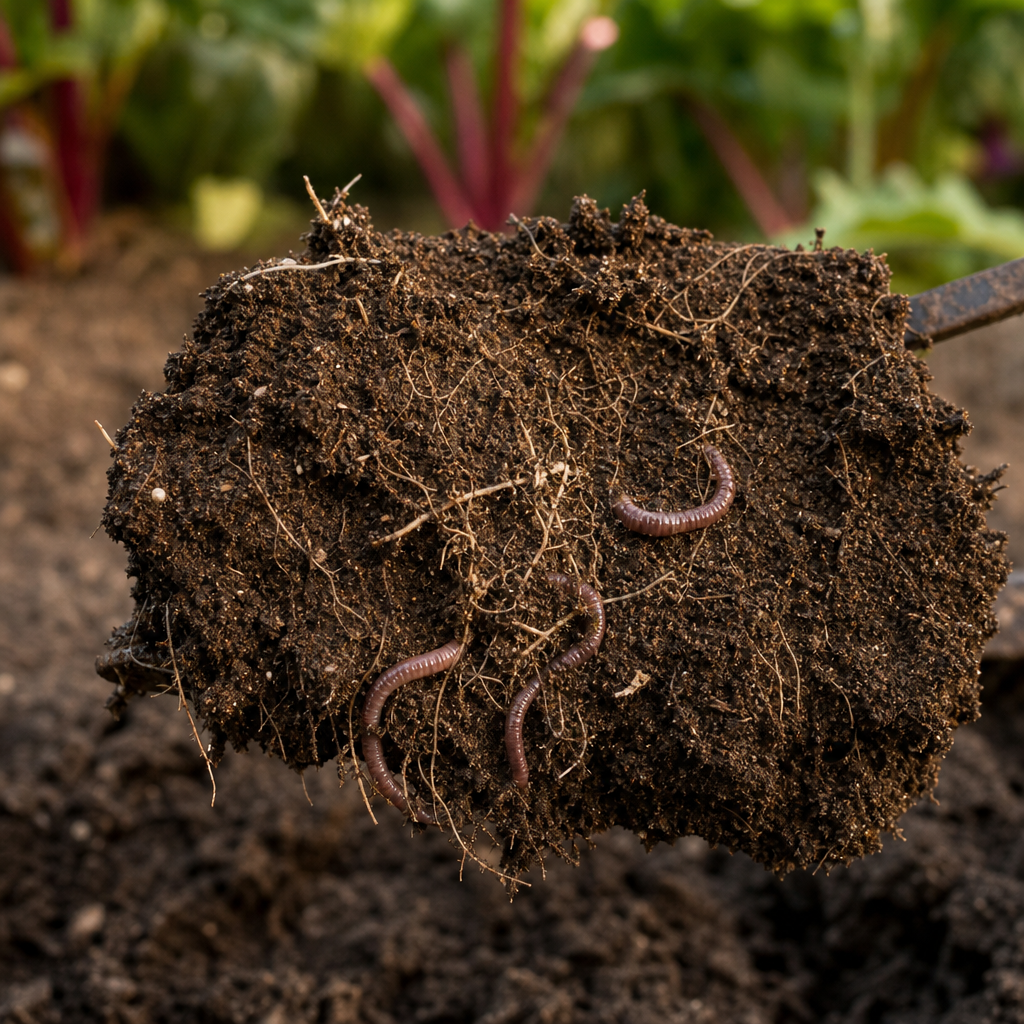
Dig up a fistful of garden soil and have a look. Brown, a bit crumbly, maybe a worm or two if you're lucky. Deeply unimpressive. And yet that handful is home to something so mind-bending it makes the Amazon rainforest look a little understaffed. A single teaspoon of healthy garden soil contains more individual living organisms than there are people on the entire planet. Not creatures you'd need a decent magnifying glass to spot – we're talking microscopic bacteria, fungi, protozoa, nematodes. A whole city, teeming, working, arguing over territory, and running the place with more competence than most city councils.
The reason your tomatoes actually produce tomatoes is almost certainly nothing to do with you.
The Fungi Get the Interesting Job
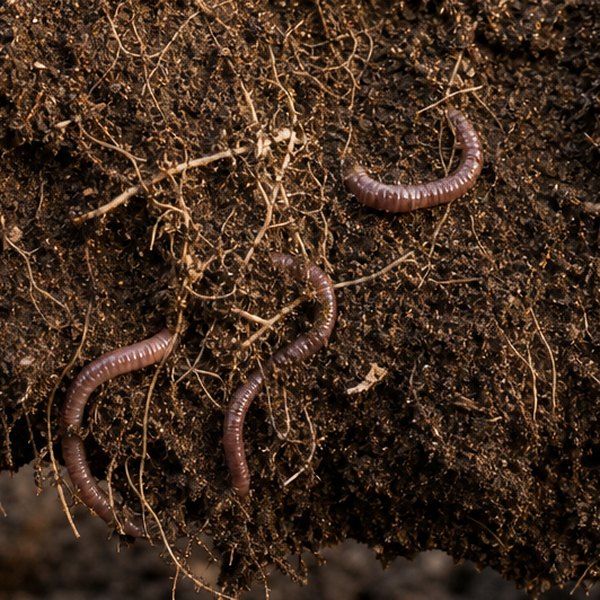
The fungi get the most interesting job. Beneath your beds and borders there are threads of mycelium – finer than a human hair – spreading outward from plant roots in every direction, sometimes for metres. These are the broadband cables of the soil city. Plants pipe sugars down into their roots and hand them off to the fungi; the fungi, in exchange, go and find water and minerals, especially phosphorus, that the plant roots could never reach alone. It is a trade deal that has been running for around 400 million years. That makes it rather older and more stable than any human arrangement you'd care to mention.
Bacteria Doing Alchemy
Deeper down, bacteria are doing something that sounds like alchemy. Nitrogen is everywhere – it makes up most of the air you're breathing right now – but most plants cannot grab it directly from the atmosphere. Certain bacteria, including those that live in little nodules on the roots of beans and peas, can. They pull nitrogen out of the air and convert it into a form plants can actually use, which is why your grandmother rotated her crops and grew beans before brassicas. She probably didn't know about the bacteria specifically. The soil city was repaying her for the favour anyway.
The Nematodes
Then there are the nematodes – tiny roundworms, invisible to the naked eye, patrolling the different layers of a single crumb of earth like beat officers on different floors of the same building. Some eat bacteria. Some eat fungi. Some eat each other. A healthy soil has predators keeping populations in check so no single group overruns everything. The moment you drench the place in pesticides or compact it with heavy foot traffic, you're not just removing a few bugs. You are demolishing the infrastructure.
It Changes How You Garden
This is the part that changes how you think about gardening. Feeding your plants is almost secondary. The primary job is keeping the city functional. Add compost and you're essentially building new housing. Mulch suppresses the weeds and keeps the soil surface from cracking and drying out – because a dried cracked surface is a ghost town, and ghost towns don't grow anything. For more on the hidden life going on behind surfaces you thought you understood, this piece on Your Walls Are Lying To You (And They've Been Doing It Since The Victorian Era) is a satisfying rabbit hole on a similar theme.
Leave a patch of ground undug and the city organises itself. The worms pull organic matter down from the surface. The fungi spread. The bacteria multiply. You thought you were the gardener. Turns out you're mostly just the landlord.
Questions this raises
- How do you tell if your soil is healthy?
- Does digging destroy soil microbial life?
- Which fertilisers harm soil bacteria?
- Can you rebuild soil life in a dead garden?