
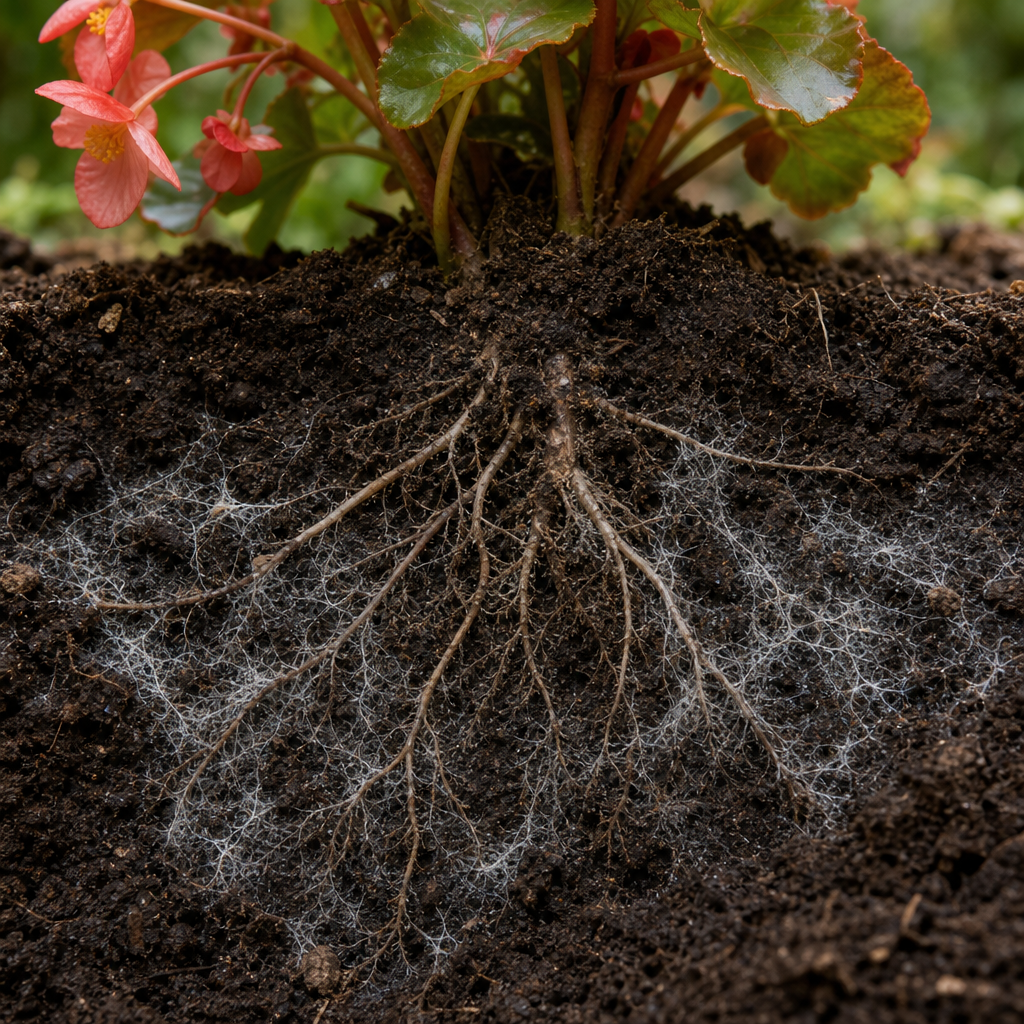
There's a deal being struck right now under your garden. You can't see it, you didn't broker it, and frankly you weren't invited. While you're up top deciding whether to move the hostas, something far older and considerably more ruthless has been running the whole operation from below.
Four Hundred and Fifty Million Years of Practice
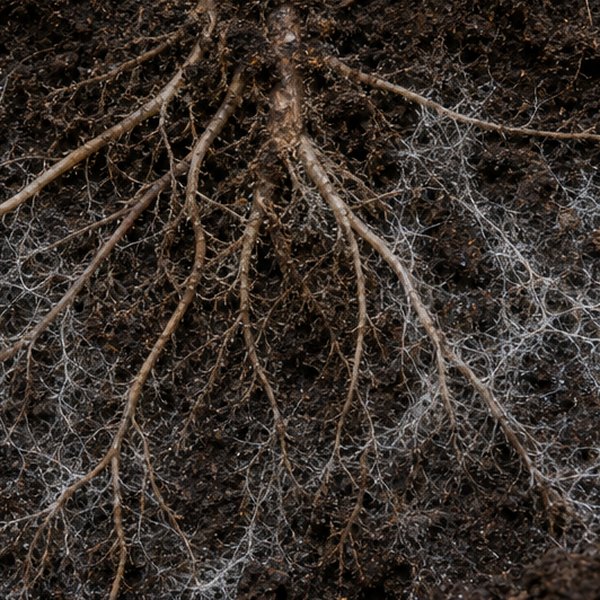
It's called mycorrhizal fungi, and it has been at this for somewhere around 450 million years. Long before flowers existed. Long before bees, long before anyone thought to write "easy care" on a plant label. The fungi weave themselves into the roots of most plants in your garden, extending out into the soil in threads so fine they make actual roots look clumsy and oversized by comparison. Those threads can reach minerals – phosphorus especially – that sit just a little too far away for the plant to bother with. And here's where the deal gets interesting.
What the Fungi Want in Return
The plant, meanwhile, is sitting on something the fungi desperately want: sugar. Photosynthesis produces more of the stuff than the plant strictly needs, and the fungi know this. So they show up, essentially, as mineral dealers. You bring the sugar, we'll bring the phosphorus. The plant obliges. The fungi oblige. Nobody shakes hands because nobody has hands, but the exchange happens nonetheless, and has done since before the Devonian period ended.
Can fertiliser kill the fungi under your garden?
What's remarkable is how completely this undermines the idea of "feeding" a garden. When you tip a bag of fertiliser onto your beds, you're cutting straight to the end of the negotiation – shoving phosphorus directly at the roots so the plant doesn't need to bother with the fungi at all. Which sounds efficient, until you realise you've just made the underground economy redundant. The fungi, with nothing to trade for, retreat. The network shrinks. The plant gets its fix but loses its web of contacts, and next time there's a drought or a nutrient shortage in a corner of the bed the fertiliser didn't quite reach, there's nobody left to call.
Heavy tilling does the same thing. Those fine fungal threads are physical structures, and a spade ripping through them is about as gentle as putting a motorway through a market town. Gardeners who dig less and mulch more tend to find their soil doing strange, good things over a few years – plants establishing faster, drought stress dropping – and the explanation is usually that the network was allowed to rebuild itself quietly.
For something with a completely different take on what's going on behind the surfaces we take for granted, this piece on Your Walls Are Lying To You (And They've Been Doing It Since The Victorian Era) is worth a read.
The Threads Connect Plant to Plant
Back underground: the fungi don't just serve the plant they're attached to. The threads connect to multiple plants at once, and there's reasonable evidence that the network moves carbon between trees – older, established ones appearing to share resources with younger, shadier neighbours. Your garden, in other words, is less a collection of individual plants you've chosen and more a commune that was already in session when you moved in.
You can work with it, though. Mycorrhizal inoculant is now sold in most garden centres – a powder you apply to roots at planting time, giving the network a head start somewhere it hasn't had time to establish yet. Then step back. The negotiation will handle itself.
Questions this raises
- Do garden centre mycorrhizal products actually work?
- How much does digging damage fungal networks?
- Which plants don't form mycorrhizal partnerships?