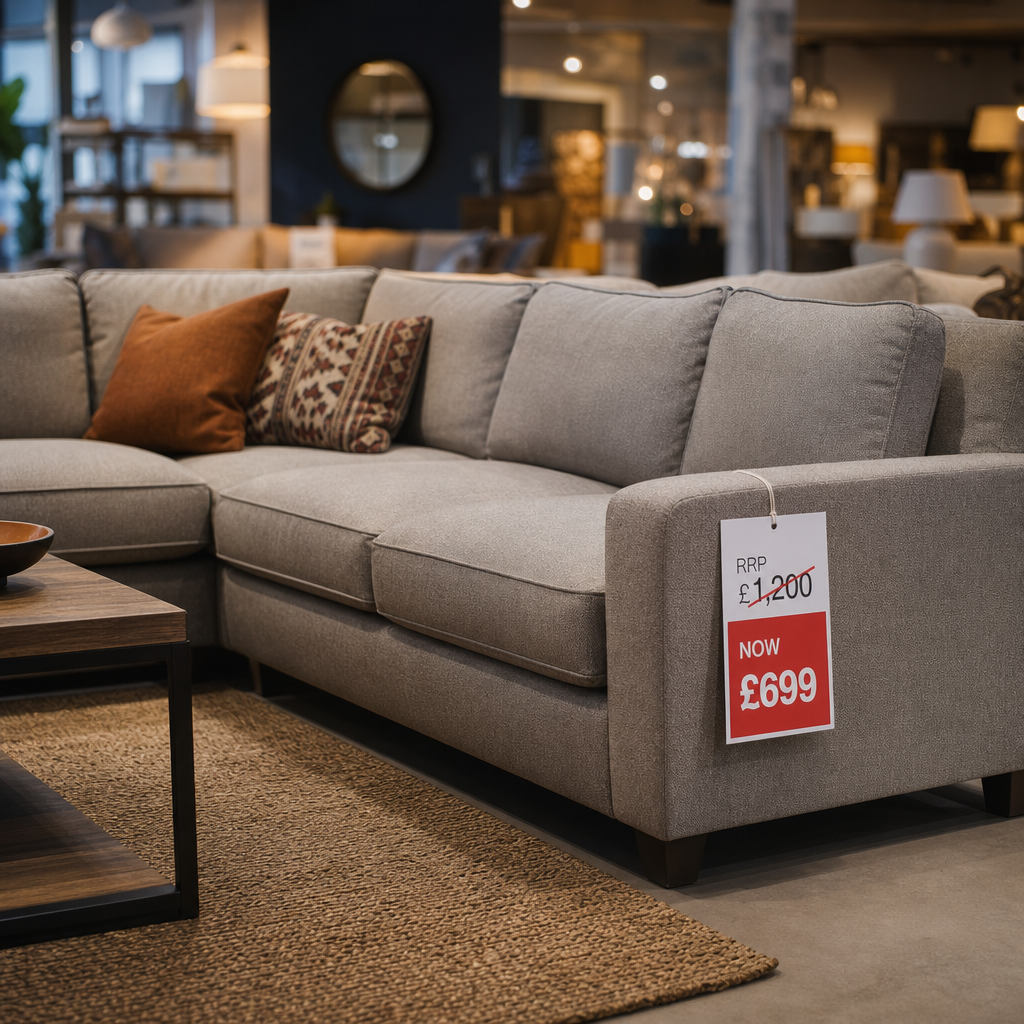
There's a reason you walked into a furniture shop for a lamp and came out three hours later having agreed, in principle, to a corner sofa on interest-free credit. It wasn't a coincidence. It wasn't your fault, exactly. And it wasn't the salesman's winning personality. It was the price tag – or rather, everything the price tag was doing to your brain before you'd consciously registered a single digit.
The Sale Is Older Than You Think
The British "sale" is older than most people realise. Victorian department stores invented it not because they suddenly had surplus stock, but because they discovered something remarkable: a price that had been higher felt like a gift, even if the original higher price had existed for about a fortnight and fooled nobody. John Wanamaker in America and William Whiteley in London were doing this in the 1870s. A hundred and fifty years later, the logic is identical. The crossed-out number sitting next to the red sticker isn't information. It's a story about what you're saving, and your brain is extremely susceptible to stories.
Anchoring
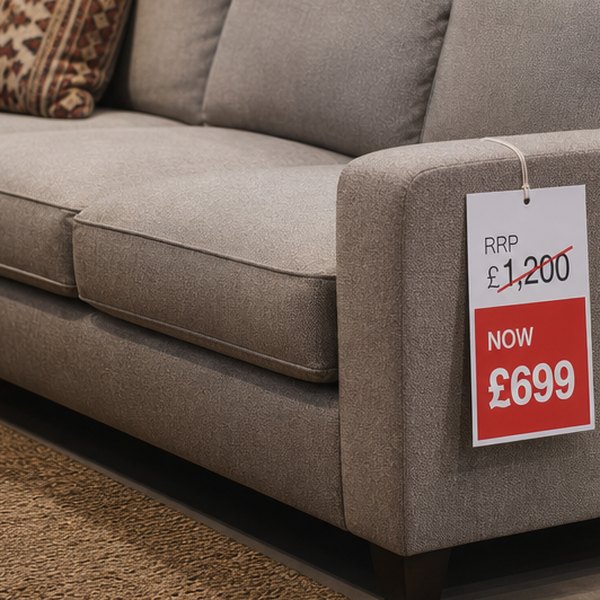
Psychologists call this anchoring. The first number you see lodges in your mind like a tent peg, and everything afterwards is judged relative to it. So when a mattress has an RRP of £1,200 but is "currently" £699, you're not really evaluating whether £699 is reasonable for that mattress. You're evaluating the gap. The question your brain is actually answering is "is this a good deal?" rather than "is this good value?" Those are completely different questions.
The Architecture of a Price
This is why the architecture of a price is rarely just the number itself. There's the anchor – the original or RRP. There's the reduction, your imagined saving. And then there's the invisible costs queuing patiently behind those two: the delivery charge that appears at checkout, the optional-but-somehow-expected warranty, the finance arrangement that stretches a painful sum into something that sounds fine per month. On property, it gets even more elaborate. Survey fees, stamp duty, solicitor's costs, and then the slow drip of what a house actually costs once it's yours. For a deeper dig into the hidden psychology built into domestic spaces and objects, Your Walls Are Lying To You (And They've Been Doing It Since The Victorian Era) is worth a read.
What to Do Before You Buy
The most useful thing you can do, before you buy anything significant, is to name the anchor. Just noticing it – "that crossed-out price is doing something to me" – dissolves about half its power. Then ask the plain question: is this price fair for this thing, in isolation, with no reference to what it used to be or what it's next to on the shelf?
Because the price tag is never just a price. It's a carefully constructed feeling. And feelings, unlike numbers, are something you can argue with.
Questions this raises
- How do furniture shops set their original prices?
- Is interest-free furniture credit ever a good deal?
- Why are sofas almost always on sale?
- Do UK rules stop shops faking an original price?