
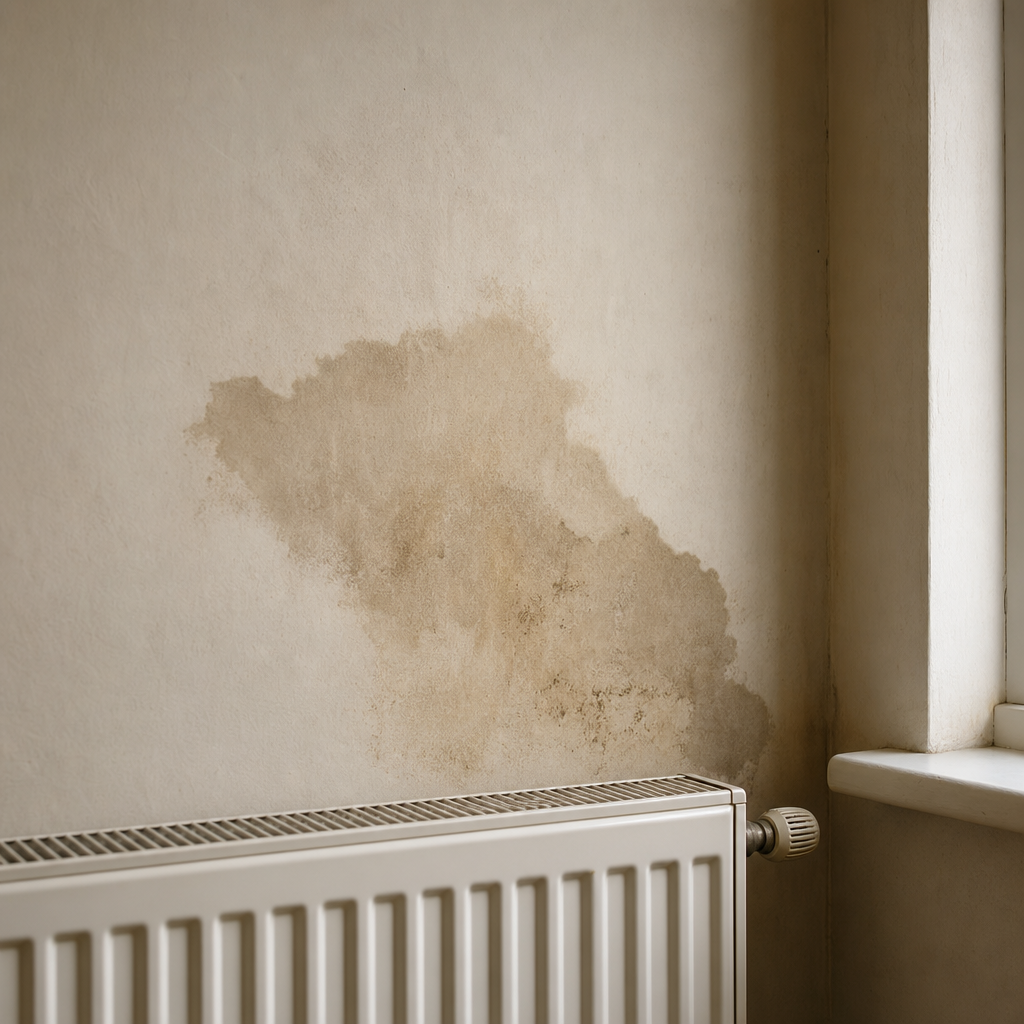
Your wall has a damp patch. It appeared sometime around November, it's roughly the size of a side plate, and it is sitting right there above the radiator, looking suspicious. Your immediate instinct is probably to blame the wall. But the wall is not the culprit. The wall is barely even a witness. It is, at best, a confused messenger that has arrived breathless at the wrong address.
Buildings send distorted signals. Water and structural stress both travel through a house by hidden routes – ducking through cavities, riding along joists, pooling behind plaster – before surfacing somewhere completely unrelated to where the trouble actually started. The damp patch above your radiator might be tracking in from a missing roof tile four metres away, following the line of a ceiling joist until it finds somewhere warm enough to evaporate and reappear as a stain. The wall had nothing to do with it and has genuinely no idea what's going on.
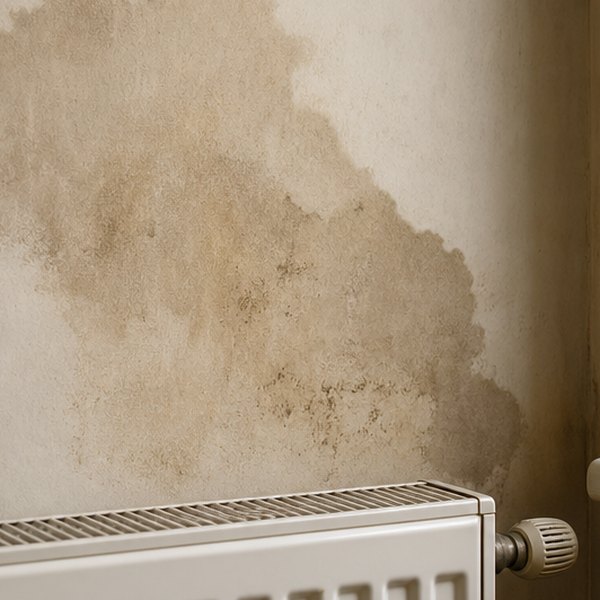
Doctors call this referred pain. You damage your shoulder and feel it in your elbow. A heart attack announces itself as jaw ache. Buildings work exactly the same way, which is why chasing maintenance faults by starting at the visible symptom is usually a waste of time and money.
So here is a more useful approach: read the clue, then trace it backwards.
The shape of the crack
A thin, diagonal crack running from the corner of a window or door frame is almost never a structural problem. It is the building settling or the timber lintel above the opening expanding and contracting with the seasons – your house does this constantly, and that particular crack is basically its way of yawning. A horizontal crack in a brick or block wall, though, especially one that runs along a mortar joint, is far more interesting. That is what lateral pressure looks like. It suggests the wall is being pushed from one side, which points you toward something external: soil pressure, drainage, a raised flower bed that has been sitting against the wall for ten years and quietly convincing it to lean.
The time of year the stain appears
A damp patch that shows up in winter and fades by March is almost certainly condensation, not a leak. Warm indoor air hits a cold wall, cools below its dew point and deposits its moisture. The wall is blameless. The real story is usually ventilation, or the lack of it.
A stain that appears after heavy rain and dries out within a week points to penetrating damp – water being driven through the wall face. But if the stain appears days after the rain, not during it, the water has taken a long route to get there. It is almost certainly entering somewhere else entirely – probably a parapet, a gutter, or a flashing that you have not looked at in years.
For a deeper look at what walls are hiding, and the long history of buildings sending misleading signals, Your Walls Are Lying To You (And They've Been Doing It Since The Victorian Era) is well worth a proper read.
The position of the stain
High on a wall, close to the ceiling? Start at the roof. Low down near the skirting? Think rising damp or a leaking pipe run under the floor. Right in the middle of a wall with no apparent connection to anything? Suspect a pipe buried in the plaster, running horizontally between rooms – more common in older homes than you might expect.
The paragraph is characterful and uses a wry, personified closing line that fits the house voice. It does not match any of the rewrite triggers.
The useful habit is to resist the wall entirely as a starting point. Stand in front of your suspect patch, think about what is directly above it, directly behind it, and what sits outside it, then start there instead. Nine times out of ten, the wall is not lying to you out of spite. It is just the last place the signal happened to surface, and it finds the whole thing as baffling as you do.
Questions this raises
- Why does condensation gather above a radiator?
- How do you tell condensation from rising damp?
- Should you use a damp meter yourself?
- Can a roof leak show up on a bedroom wall?