
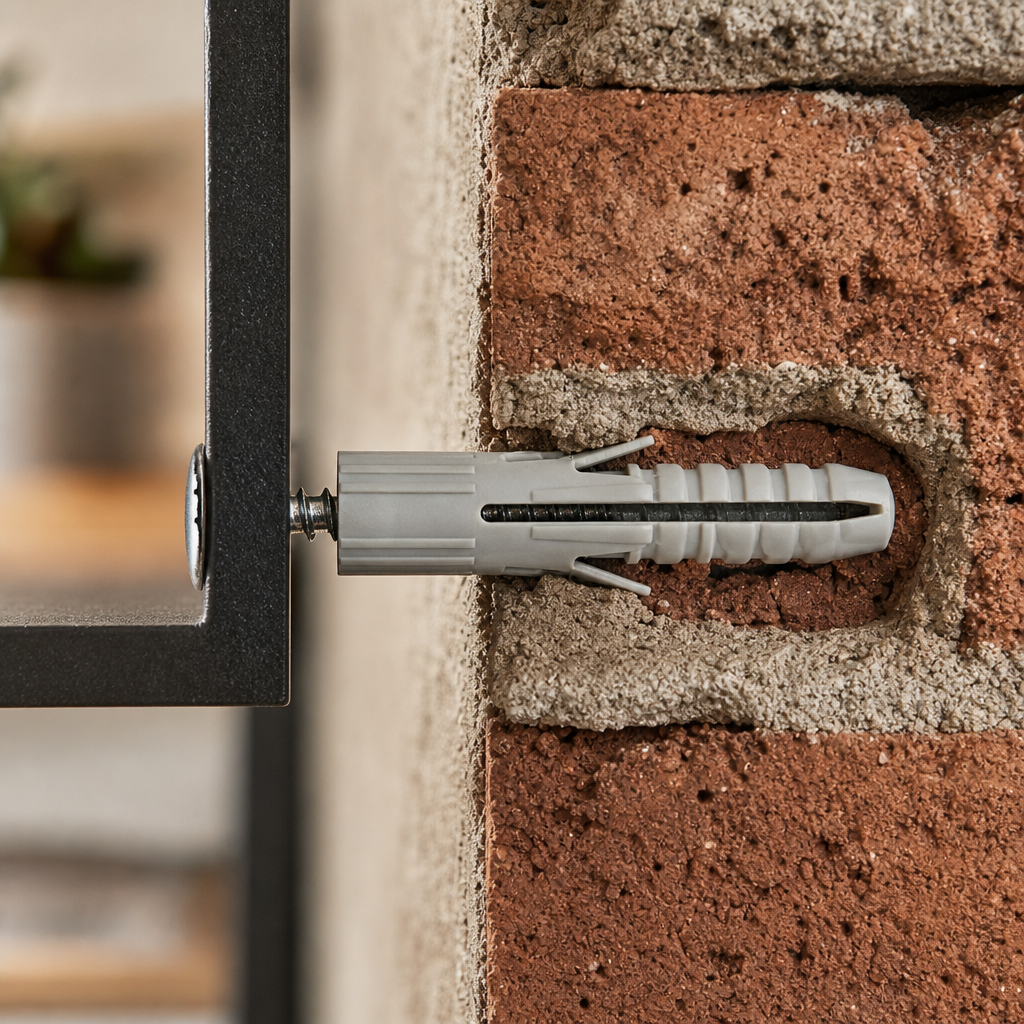
There's a small moment of satisfaction when a rawlplug bites – that slight resistance as the screw goes home, the fixture sitting solid where moments ago there was just a hole. It feels like the plug is gripping the wall. It isn't, quite. What's actually happening is considerably more clever, and understanding it is the difference between a shelf that stays up for twenty years and one that lands on your cat at 3am.
The Wall Is Doing The Work, Not The Plug
A rawlplug – or any wall anchor, really – is a confidence trick played on the masonry itself. When you drive a screw into an expanded plug, the plug flares outward. That outward push becomes a radial squeeze in every direction, pressing hard against the surrounding material. The wall, being solid and compressed, has nowhere to go. It resists. And that resistance is the actual force holding your shelf up.
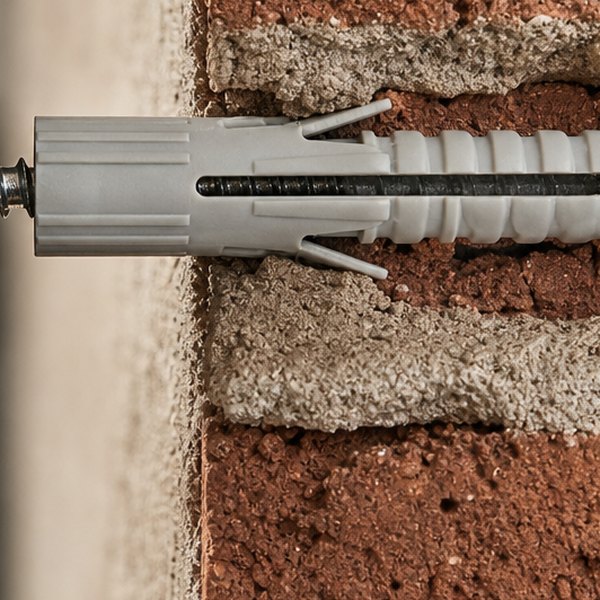
The screw isn't gripping the wall. It's pressuring the plug into pressuring the wall into holding everything still. It's physics as judo: using the wall's own compressive strength against it.
Which is beautiful, until the wall turns out not to have that compressive strength. Then things get interesting.
Why Brick, Plaster, and Plasterboard Are Three Completely Different Arguments
Solid brick or dense block is perfect for this trick. There's mass in every direction, the material compresses without crumbling, and the anchor has something substantial to squeeze against. A decent M6 anchor in solid brick can hold comfortably beyond 50kg – well beyond anything you're likely to hang on a wall at home.
Older plaster over brick is mostly fine, provided the plaster itself is still bonded well. Tap it. A hollow knock means the plaster has pulled away from the brick behind, and then you're anchoring into a thin shell that will eventually just pop out like a champagne cork.
Plasterboard is the one that catches people out. It has almost no compressive strength at all. Drive a standard rawlplug in and it'll spin uselessly in an ever-widening hole, because there's nothing solid to squeeze against. Plasterboard needs toggle bolts or cavity anchors, which work on a completely different principle: they unfold behind the board and pull it into compression from the back, like a very small, very determined hand reaching through the wall to hold the board flat.
Why do wall plugs spin uselessly in the hole?
Most DIY fixing failures aren't bad drilling or wrong-sized plugs. They're misread walls. A modern stud partition looks identical to a solid wall until you're trying to work out why your rawlplug keeps spinning. Knocking produces a slightly different sound – more resonant, less dead – and a thin nail pushed in gently will confirm it within seconds.
For more on understanding what's happening beneath the surfaces of your home, The Population Explosion Happening Beneath Your Boots takes a similarly close look at what's going on where you can't easily see it.
Once you can read what a wall is made of before you drill, the whole rawlplug trick becomes reliable every single time. The wall was always doing the work – you just needed to check it was strong enough to bother.
Questions this raises
- Which wall plug suits plasterboard rather than brick?
- How much weight can one rawlplug actually hold?
- Should the drilled hole be slightly undersized?