
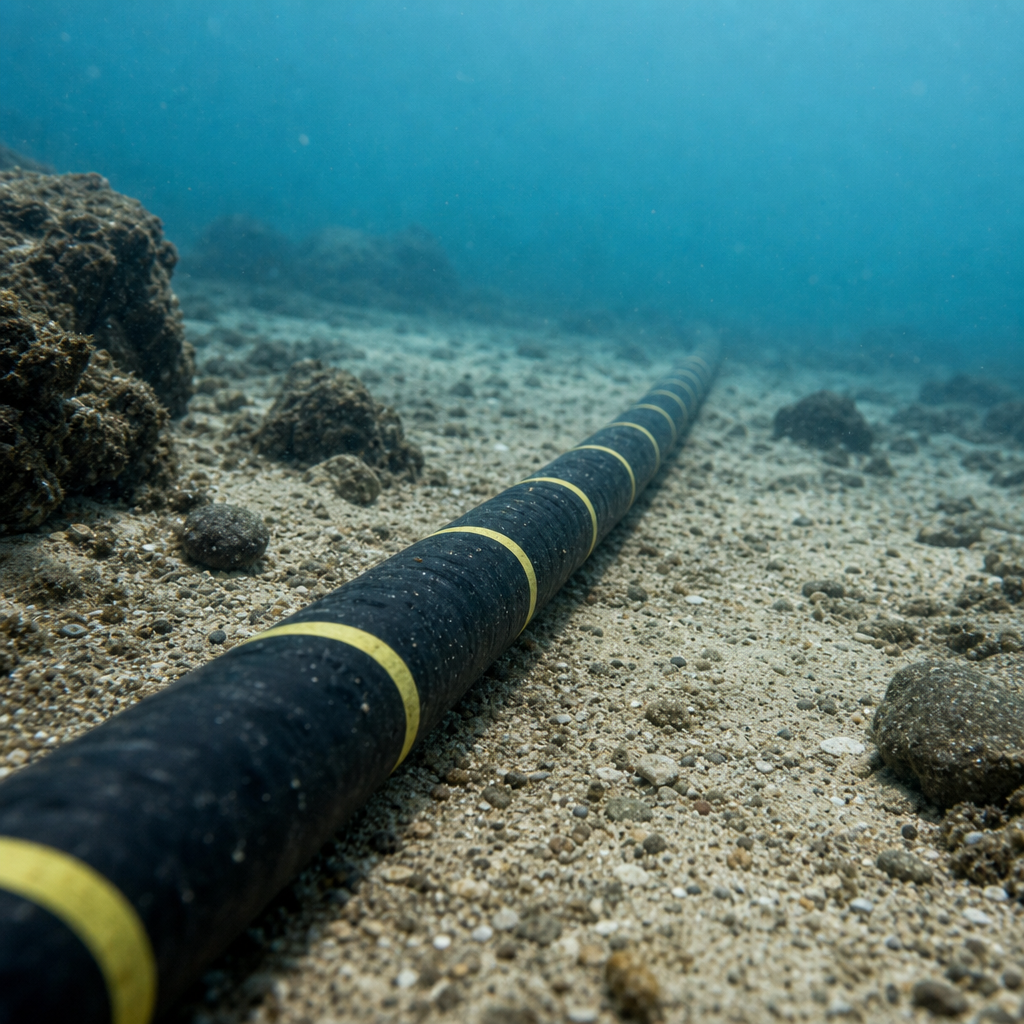
Most people, if you asked them to point at the internet, would gesture vaguely upward. Towards a satellite, maybe, or some invisible wireless haze floating above the rooftops. It's called "the cloud", after all. It sounds airy. Weightless. Somewhere up in the ether with the Wi-Fi signals and the 5G.
Here is the thing nobody really tells you: almost none of it is up there. About 95% of the world's international internet traffic travels along cables on the ocean floor. And a lot of those cables are no wider than a garden hose.
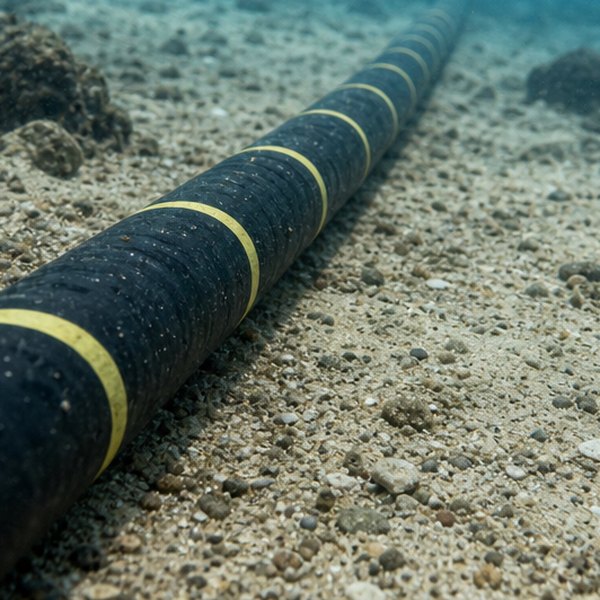
Right now, while you're reading this, your data almost certainly just crossed an ocean along a fibre-optic tube that sits in the dark, under several kilometres of water, pressed into the silt of the seabed.
The Victorian Nervous System
This is where it gets genuinely strange. The routes those cables follow aren't some grand feat of 21st-century engineering. They largely trace the paths of Victorian telegraph cables, laid from the 1850s onwards by ships that were basically enormous floating spools of wire. When Brunel's SS Great Eastern ploughed across the Atlantic in 1866 to lay the first working transatlantic telegraph cable, it was solving exactly the same problem the internet would need to solve a century later: how do you move information across an ocean quickly?
The answer, it turns out, has barely changed. You put a cable on the seabed and hope for the best.
The Garden Hose Under the Ocean
Modern undersea cables are more sophisticated than the Victorian originals, obviously. The data travels as pulses of light down glass fibres thinner than a human hair. Each cable can carry millions of simultaneous phone calls and video streams. But the physical reality is still absurdly humble. The armoured outer casing that protects the whole thing in shallow coastal waters is roughly the size of a fat hosepipe – and out in the deep ocean, where there's less risk of a ship's anchor doing damage, the cable slims down even further.
For a piece on what other hidden physical systems your home is quietly connected to, the article What Your Pipes Are Saying While You Sleep is well worth a look.
When a Fishing Boat Changes Your Password
These cables do break. Sharks occasionally bite them – apparently attracted by the electromagnetic fields. Ship anchors snag them. Earthquakes shift them. In 2006, a seabed earthquake near Taiwan damaged several cables simultaneously and knocked out internet service across much of South-East Asia for weeks.
There are only around 60 cable-repair ships in the world. When a break happens in deep water, one of those ships has to sail to the right patch of ocean – itself a significant journey – then use grappling hooks to fish a cable up from several kilometres below the surface, splice in a repair, and lower it again. Weeks can pass before service is restored.
Is any internet traffic carried by satellite?
Satellites do carry some internet traffic, but mostly to very remote places where laying a cable isn't practical. For the vast bulk of what we do online every day – streaming, banking, sending emails, loading a map – the data is a pulse of light moving along the seabed at extraordinary speed, following paths that Victorian engineers would recognise.
The cloud isn't floating above your head. It's lying quietly at the bottom of the sea, a little cold, a little dark, and doing rather a lot of work.
Questions this raises
- Where do undersea cables come ashore in Britain?
- How deep on the seabed do the cables sit?
- Do sharks really bite undersea cables?