
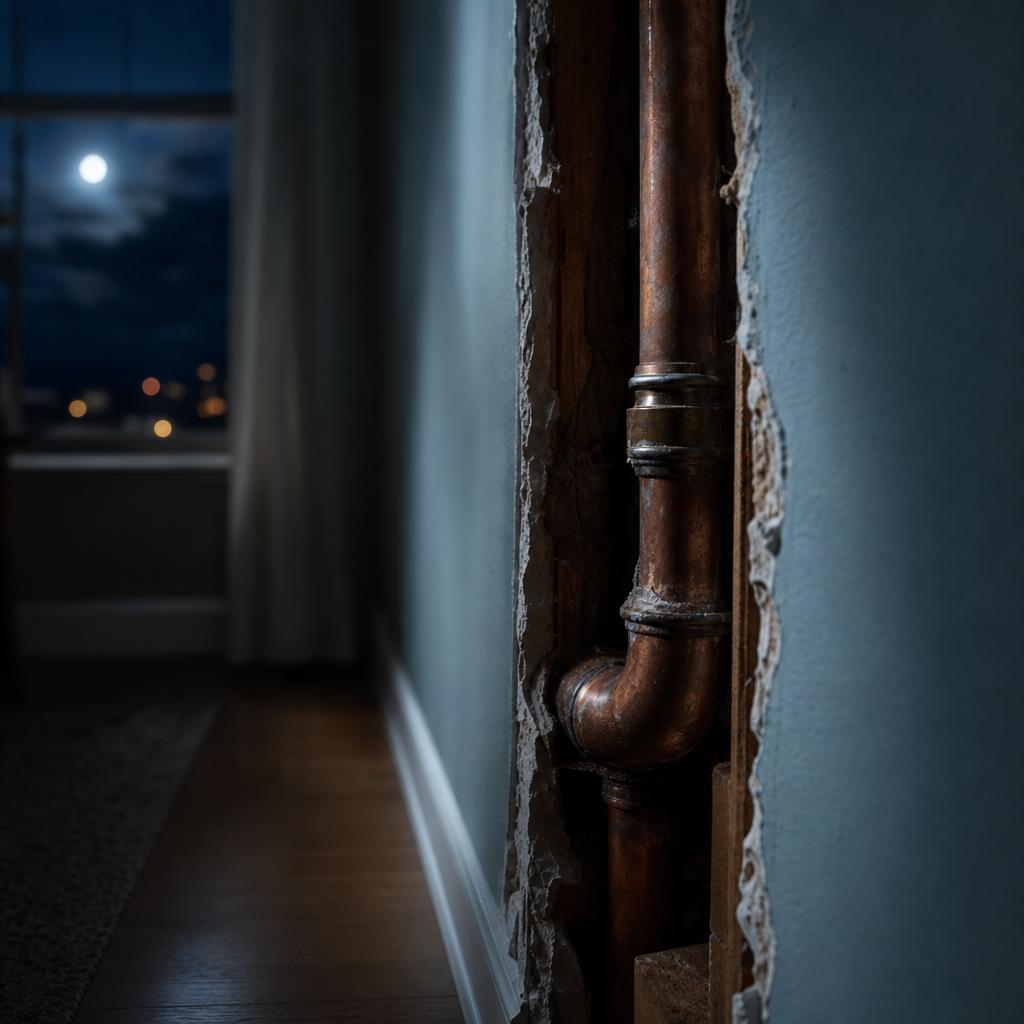
It starts around midnight. The house is quiet, you're almost gone, and then – tick. Then tick tick. Then, if you're really unlucky, a sound like someone dropped a wrench inside the wall. You lie there wondering if it's structural, or supernatural, or whether you should just buy earplugs and wait for the morning.
Here's what's actually happening: your heating system is talking. It has a vocabulary of maybe five or six sounds, each one reporting a precise physical event somewhere in the pipework. Once you know the language, that midnight concert stops being alarming and turns into information.
The Tick
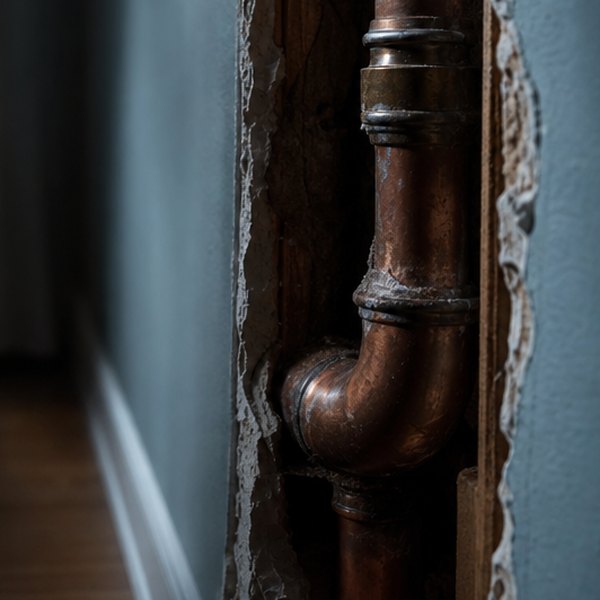
The tick is the easy one. It's just thermal expansion – metal pipes warming up as hot water moves through them, contracting again as they cool. Copper especially does this, clicking against the clips or notches that hold it in place. Nothing is wrong. The house is just breathing.
The Bang
The bang is different. If you've ever heard a sudden thud from behind the skirting board – the kind that sounds like someone punching the wall from inside – that's almost certainly water hammer. It happens when a valve closes quickly. A modern solenoid valve on a washing machine, say, or a dishwasher. The column of water that was rushing along the pipe has nowhere to go. The momentum has to go somewhere, so it slams into the end of the pipe. Repeatedly. It won't kill the system overnight, but over years it stresses joints and can loosen fittings. The fix, in most cases, is a small device called a hammer arrestor fitted near the offending appliance, or slowing down the water pressure at the mains stopcock.
The Hiss
The hiss is usually air – a pocket of it trapped in a radiator, riding around the system and collecting at the highest point. That's why the top of a radiator can be cold while the bottom is hot: the air is sitting there like a cork, blocking the water from rising. You can fix this yourself with a radiator bleed key, a couple of quid from any hardware shop. Put a cloth under the bleed valve at the top corner of the radiator, open it a quarter turn, and wait for the hiss to stop and water to appear before closing it again. The radiator should heat evenly within the hour.
The Gurgle
Then there's the gurgle – a wet, underwater bubbling sound, lower and slower than a hiss. This is usually the boiler or the pipes near it, and it often means the condensate pipe is backing up. Modern condensing boilers produce acidic water as a byproduct and drain it away through a plastic pipe that exits somewhere outside. In cold weather that pipe can freeze solid, leaving the water nowhere to drain. Pouring warm (not boiling) water over the frozen section of external pipe usually sorts it. For broader plumbing and heating guidance, homeytips.co.uk has a genuinely useful range of articles covering everything from decor to domestic systems.
Is a kettling boiler dangerous?
The kettle sound – that low, rumbling, furious boil – is the one worth taking seriously. It means limescale has built up on the heat exchanger inside your boiler, and the water trapped underneath it is boiling at pressure. The heating equivalent of a blocked artery. A chemical flush can sometimes clear it, but if the boiler's been kettling for a while, the heat exchanger itself may have taken damage.
The next time the house wakes you up at midnight, lie there and actually listen. Tick, bang, hiss, gurgle, kettle. Your system isn't being dramatic. It's being quite specific.
Questions this raises
- Why does banging in the pipes only happen at night?
- How do you stop pipes ticking under floorboards?
- Should you bleed a radiator that gurgles?