
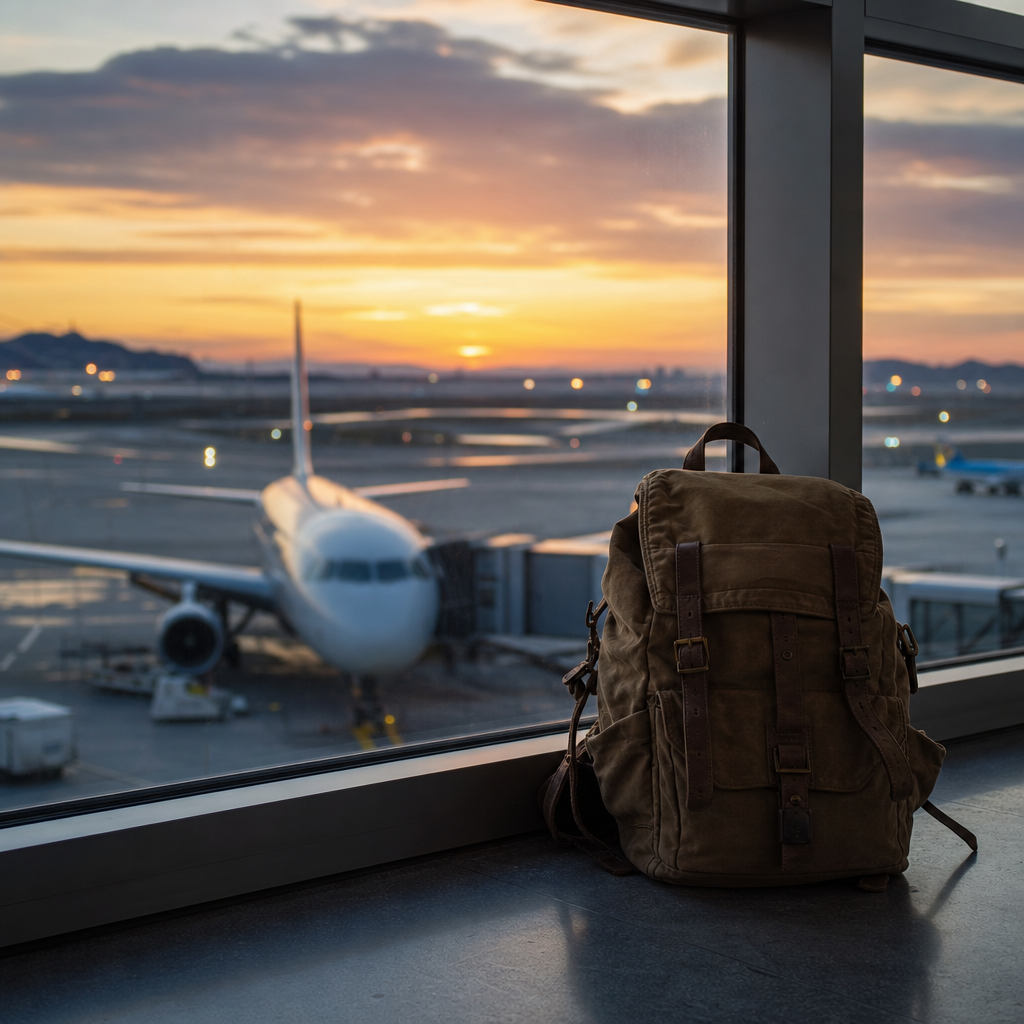
There is a feeling most travellers know but struggle to name. You are standing in a supermarket on a Tuesday, buying milk and something for tea, and somewhere between the biscuit aisle and the self-checkout you get hit by it – a sharp, inexplicable longing to be somewhere entirely different. Not unhappy, exactly. Just suddenly and urgently aware that the world is large and you are standing very still in a very small corner of it.
Fernweh
The Germans call it *Fernweh*. Literally translated, it means something like "far-sickness" – the opposite of homesickness. Where homesickness pulls you back toward something familiar, Fernweh pulls you out toward the unknown. You ache for a place you've never been. You miss distances you haven't yet crossed.
English has nothing for this. We have wanderlust, borrowed from German anyway, which has become so over-used on motivational wall prints that it has nearly stopped meaning anything. Fernweh is sharper, more specific. It's the feeling of being geographically restless in a way that borders on physical discomfort.
And it turns out there is a reason it feels physical, because it partly is. When you experience this kind of longing – for distant coastlines, for cities you've only seen in photographs – your brain's default mode network lights up. That's the same system that runs your daydreams and your sense of self. The brain treats imagined future travel almost like a rehearsal for real experience, releasing dopamine not when you arrive somewhere but when you anticipate arriving. The planning, the half-imagined versions of the trip, the moment you picture yourself somewhere else entirely – that is when the reward is richest.
Which explains something every seasoned traveller eventually notices: the planning often feels better than the going. Not because the trip disappoints, but because the imagined version is completely under your control. No queues, no delayed trains, no sunburn. Just the pure, dopamine-soaked idea of elsewhere.
Hiraeth
There is a companion word in Welsh: *hiraeth*. Closer to grief than restlessness. It describes a longing for a home that no longer exists, or perhaps never quite did – a country, a version of a place, a particular evening in a city you can never quite get back to. Not nostalgia exactly. Nostalgia is sentimental; hiraeth has teeth. For useful thinking about what generosity and trust actually feel like from the inside, in travel and elsewhere, The Best Businesses Are Accidentally Generous is worth a few minutes.
Saudade
The Portuguese have *saudade*, which catches something similar – the melancholy beauty of missing something you still love. Fado music is built entirely from it. So, arguably, is every postcard you have ever written that said "wish you were here" when what you meant was "I am already mourning this."
Do other languages have a word like Fernweh?
What is striking about all three of these words is that they exist because entire cultures developed a vocabulary for the emotional weight of movement and place. English, a language of trade and practicality, mostly just said "I want to go somewhere" and left it there. But the feeling Fernweh describes – standing in an ordinary moment and being pulled, almost physically, toward the unfamiliar – is one of the more interesting things a human body can do. It is your imagination mistaking longing for navigation, treating the ache as a compass and pointing you, quite insistently, outward.
The milk, of course, still needs to be bought.
Questions this raises
- Is Fernweh a recognised psychological condition?
- Why do some people feel wanderlust more strongly?
- How do you deal with wanderlust you can't afford?