
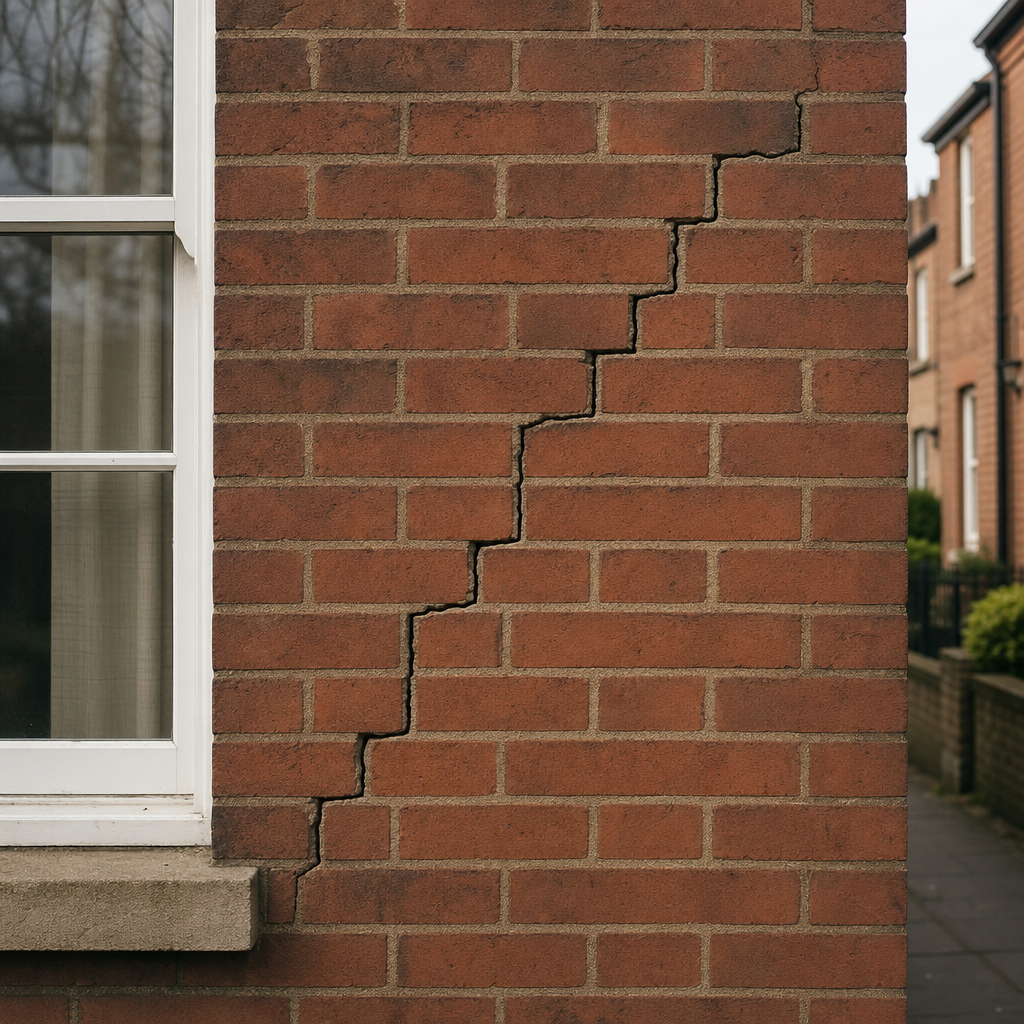
Most people see a crack and do one of two things: panic, or silently decide it doesn't exist. Both are a waste of a perfectly good piece of information. Because a crack is not your house breaking. It's your house writing something down.
Buildings are under constant pressure – thermal expansion in summer, contraction in winter, the slow settling of foundations, moisture working its way in and out of mortar. All of that movement has to go somewhere. Plaster and masonry are essentially very slow, very patient paper. A crack is what the building writes when something has been pushing on it hard enough, for long enough, to leave a mark. Once you understand that each pattern of cracking corresponds to a specific kind of force, you stop staring at it blankly and start reading it.
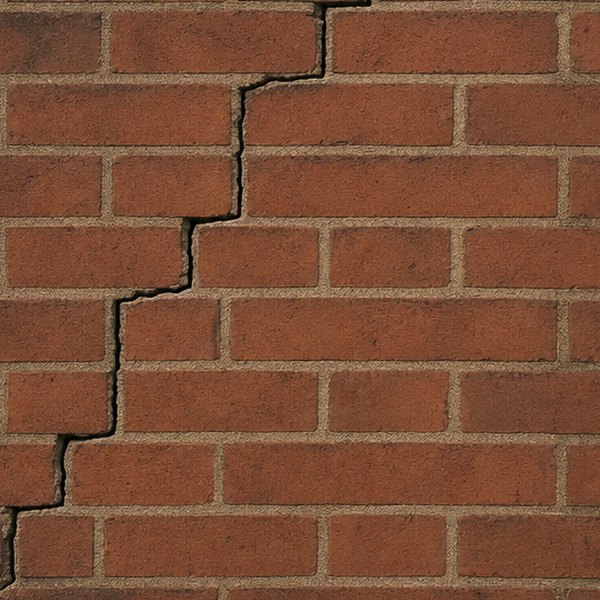
The Stair-Step (The Subsidence Signature)
That familiar diagonal zigzag that follows the mortar joints up a brick wall – stepping from one course to the next like a drunk climbing stairs – is almost always the signature of differential movement in the foundations. One section of the building has shifted slightly relative to another. It doesn't mean the house is about to collapse. It means the ground beneath one part has compressed or moved differently from the ground beneath another. In older houses, this is extremely common. A single stair-step crack that has clearly been there for years and isn't getting wider is usually just history. A crack that's actively growing is worth watching – or getting a professional eye on.
The Horizontal Crack (The Pressure Letter)
A horizontal crack running along a brick wall, particularly on a garden wall or a basement wall, is the building telling you something is pushing against it from one side. Lateral pressure – retained soil, tree roots, water building up behind the wall – creates a characteristic bow and then a break that runs more or less straight across. This one matters more than people realise. A wall that's bowing under pressure is working harder than it's designed to. Ignoring it is the kind of thing that ends expensively.
For more on reading what your walls have been trying to tell you, What Your Walls Are Trying To Say (And Why They're Almost Always Wrong About) takes the same idea further.
The Vertical Crack Above a Window (The Lintel's Diary)
A crack running straight down from the corner of a window or door frame – or fanning outward from that corner – is usually a lintel story. The lintel is the horizontal beam spanning the gap above an opening, and when it starts to fail, or when the masonry above it settles unevenly, the stress concentrates exactly at those corners and the crack radiates outward from there. Hairline versions of this are common in older properties and often inert. Wider cracks, or ones where the masonry on either side is visibly stepping out of alignment – where you can feel a lip running your finger across – need a closer look.
The Spider's Web (The Moisture Map)
A network of fine, random, surface-level cracks spreading across plaster in a pattern that looks vaguely like crazy paving is almost never structural. It's called map cracking or crazing, and it's what plaster or render does when it's dried too fast, been painted over too many times, or had moisture cycling through it repeatedly over the years – the building keeping a humidity diary. Unsightly, yes. Alarming, no.
The useful habit to build is simply this: run your finger across any crack you're worried about. If the two sides are flush, it's movement that has stopped. If there's a step – one side sitting proud of the other – the forces that created it were significant enough to displace the material, and it's worth understanding why. Your house has been keeping notes the whole time. It's just a question of learning to read.
Questions this raises
- Which crack widths suggest subsidence?
- Should you fill a crack or monitor it first?
- How do you tell if a crack is still moving?
- Does home insurance cover subsidence cracking?